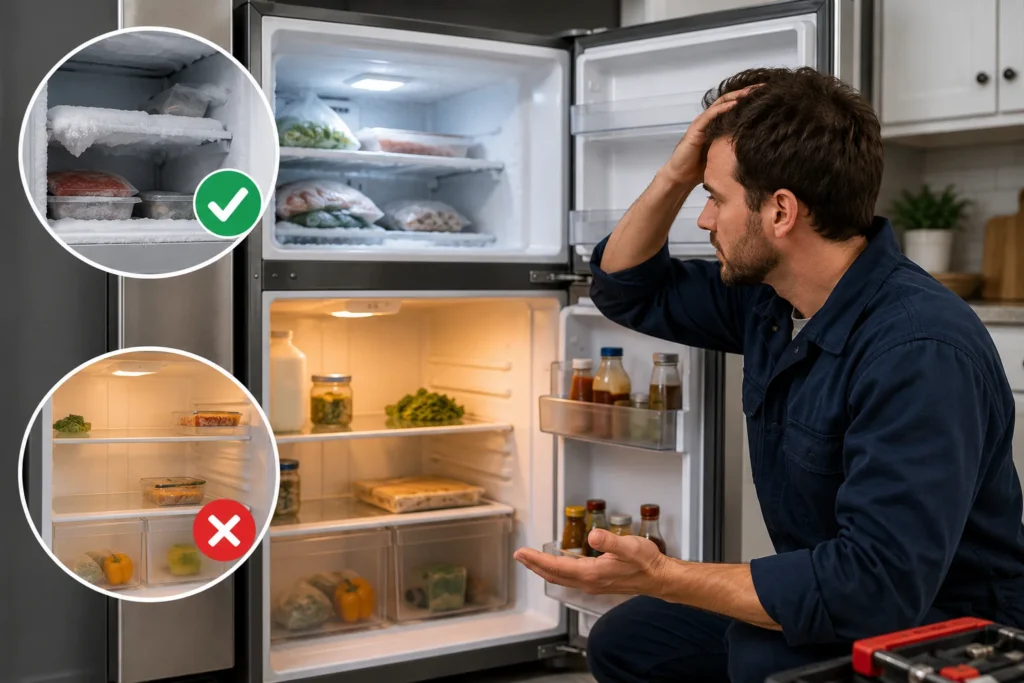
You open the fridge to grab milk, leftovers, or produce, and suddenly everything feels warm. Meanwhile, the freezer is still full of solid ice and frozen food.
If you’re dealing with a refrigerator not cooling but freezer work problem, you’re not alone. This is one of the most common refrigerator issues homeowners face, especially with modern frost-free refrigerators.
The frustrating part is that the freezer seems fine, which makes the problem confusing. Many people assume the refrigerator is completely broken when, in reality, the issue often comes down to airflow, frost buildup, dirty coils, or a failing component that controls how cold air moves into the fridge section.
The good news is that some problems are simple enough to troubleshoot yourself.
The bad news is that ignoring the issue too long can lead to spoiled food, compressor strain, expensive repairs, and sometimes complete refrigerator failure.
At Artifix Appliance Repair, we’ve seen this issue across nearly every refrigerator brand and model. In many homes, the freezer is technically still producing cold air, but something is preventing that cold air from reaching the refrigerator compartment properly.
In this guide, you’ll learn:
- Why your fridge section is not cold while the freezer still works
- The most common causes behind poor refrigerator cooling
- Easy troubleshooting steps you can try first
- Signs the problem is getting worse
- When repair is worth it versus replacement
- What refrigerator repair usually costs
- How to prevent the issue from happening again
Why Does A Refrigerator Cool The Freezer But Not The Fridge?
Most refrigerators actually cool the freezer first.
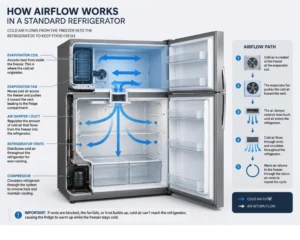
Cold air is then pushed from the freezer into the refrigerator section through vents and fans. When something interrupts that airflow, the freezer can stay cold while the fridge section becomes warm.
That’s why many homeowners notice:
- The freezer is freezing normally
- Ice maker still works
- Frozen food stays solid
- Refrigerator shelves feel warm
- Drinks are no longer cold
- Produce spoils quickly
If your fridge warm freezer cold situation starts suddenly, airflow blockage is often the first thing we check.
What Are The Most Common Causes Of A Fridge Warm Freezer Cold Problem?
Several parts can cause this issue. Some are minor. Others require professional repair.
Here are the most common causes we see during refrigerator repair calls.
| Problem | What Happens | Difficulty |
| Blocked air vents | Cold air cannot reach fridge section | Easy |
| Frost buildup | Evaporator airflow becomes restricted | Moderate |
| Faulty evaporator fan | Cold air stops circulating | Moderate |
| Dirty condenser coils | Refrigerator struggles to cool | Easy |
| Damaged damper control | Airflow between compartments fails | Moderate |
| Faulty thermostat | Incorrect temperature regulation | Moderate |
| Defrost system failure | Ice buildup blocks circulation | Professional repair |
| Weak compressor | Refrigerator cannot maintain cooling | Professional repair |
Could Blocked Air Vents Be The Reason Your Fridge Section Is Not Cold?
Yes, absolutely.
This is one of the easiest fixes and one of the most overlooked causes.
Inside your refrigerator are vents that allow cold freezer air to circulate into the fridge compartment. If food containers, produce bags, or overpacked shelves block these vents, airflow becomes restricted.
You may notice:
- Back of fridge feels colder than front
- Top shelves warmer than bottom
- Uneven cooling
- Certain items spoiling faster
What You Can Do
- Locate interior air vents
- Remove food blocking airflow
- Leave space between items
- Avoid overpacking shelves
Many clients are surprised how often airflow alone causes cooling complaints.
Can Frost Buildup Cause A Refrigerator Not Cooling Fix Situation?
Yes, and this is extremely common.
If frost builds up around the evaporator coils behind the freezer panel, cold air can no longer circulate properly.
This usually points to a defrost system problem.
Signs Of Frost Buildup
- Thick ice on freezer walls
- Freezer works but fridge warm
- Strange fan noises
- Water leaks after temporary thawing
- Cooling gets worse gradually
Sometimes unplugging the refrigerator for several hours temporarily fixes the issue because the ice melts. But if the underlying defrost problem is not repaired, the issue usually returns within days or weeks.
At Artifix Appliance Repair, we often find failed:
- Defrost heaters
- Defrost thermostats
- Control boards
- Temperature sensors
What Happens If The Evaporator Fan Stops Working?
The evaporator fan is responsible for moving cold air throughout the refrigerator.
If this fan fails:
- The freezer may still feel cold near the coils
- Refrigerator compartment warms up
- Airflow becomes weak or nonexistent
- Cooling becomes inconsistent
Common Signs Of A Bad Evaporator Fan
- No fan sound when door closes
- Clicking or grinding noises
- Refrigerator warm but freezer partially cold
- Poor airflow from vents
This repair often requires professional disassembly of the freezer compartment.
Our technicians repair evaporator fan issues on all major refrigerator brands using original high-quality replacement parts whenever possible.
Could Dirty Condenser Coils Cause A Fridge Not Cooling Fix Issue?
Definitely.
Dirty condenser coils force your refrigerator to work much harder than normal.
Over time, dust, pet hair, grease, and debris build up around the coils, reducing cooling efficiency.
Symptoms Of Dirty Coils
- Refrigerator feels warm
- Compressor runs constantly
- Energy bills increase
- Sides of fridge feel hot
- Cooling becomes inconsistent
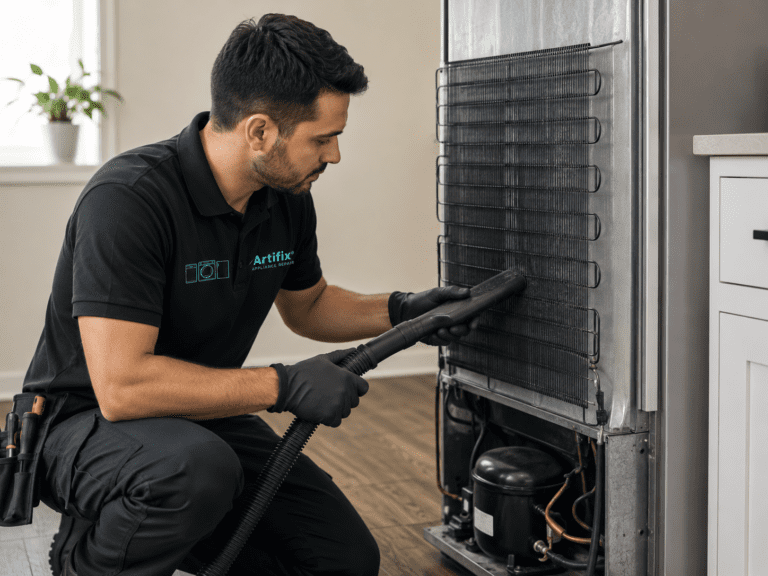
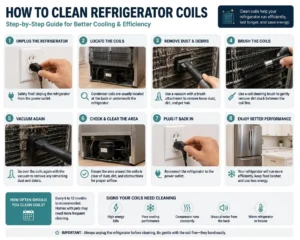
How To Clean Refrigerator Coils
- Unplug the refrigerator
- Locate the coils
- Use a coil brush or vacuum
- Remove dust buildup carefully
- Restore airflow around appliance
You should clean refrigerator coils every 6 to 12 months.
Homes with pets usually need more frequent cleaning.
What Is Damper Control And Why Does It Matter?
The damper control regulates how much cold air moves from the freezer into the refrigerator section.
If the damper sticks closed or becomes faulty:
- Freezer stays cold
- Refrigerator compartment warms up
- Airflow becomes weak
Some dampers are mechanical. Others are electronically controlled.
You may hear clicking noises or notice fluctuating temperatures if the damper motor fails.
This is a very common repair in modern refrigerators.
Can A Faulty Thermostat Cause The Fridge Section Not a Cold Problem?
Yes.
The thermostat monitors temperature and tells the refrigerator when to cool.
When it malfunctions:
- Cooling cycles become inconsistent
- Refrigerator stays too warm
- Compressor may run improperly
- Freezer may still partially function
A thermostat issue often develops gradually instead of suddenly.
You may notice:
- Food spoiling faster
- Refrigerator temperature fluctuating
- Random warming periods
What Usually Goes Wrong With Refrigerator Defrost Systems?
Modern refrigerators automatically defrost themselves several times daily.
When the defrost system fails, ice builds around the evaporator coils and blocks airflow.
This is one of the biggest reasons homeowners experience a refrigerator not cooling but freezer work situation.
Defrost System Components
| Component | Purpose |
| Defrost heater | Melts ice buildup |
| Defrost thermostat | Monitors coil temperature |
| Control board | Activates defrost cycle |
| Defrost timer | Regulates timing |
If any of these fail, ice buildup eventually chokes airflow completely.
At Artifix Appliance Repair, we regularly diagnose hidden defrost failures that homeowners initially mistake for compressor issues.
Is It Safe To Keep Using The Refrigerator?
Usually not for long.
Once the fridge section becomes warm, food safety becomes a concern.
According to the FDA, refrigerator temperatures should stay below 40°F to prevent bacterial growth.
Warm refrigerator temperatures can quickly spoil:
- Dairy products
- Meat
- Leftovers
- Produce
- Medications
If temperatures continue rising, you should move perishable food elsewhere until the issue is repaired.
External Source
FDA Food Safety Guidelines
https://www.fda.gov/food/buy-store-serve-safe-food/refrigerator-thermometers-cold-facts-about-food-safety
How Much Does A Refrigerator Not Cooling Repair Usually Cost?
Repair costs vary depending on the failed component and refrigerator model.
Here’s a general breakdown.
| Repair Type | Typical Cost Range |
| Coil cleaning | $100 to $200 |
| Evaporator fan repair | $200 to $450 |
| Thermostat replacement | $150 to $350 |
| Damper control repair | $200 to $400 |
| Defrost system repair | $250 to $500 |
| Compressor repair | $600 to $1200+ |
High-end built-in refrigerators may cost more due to specialized parts.
At Artifix Appliance Repair, we always explain the issue clearly before starting work so you understand exactly what failed and what repair makes sense financially.
Should You Repair Or Replace The Refrigerator?
That depends on several factors.
Repair Usually Makes Sense If
- Refrigerator is under 10 years old
- Compressor still healthy
- Problem isolated to one component
- Appliance is high-end or built-in
- Repair cost reasonable compared to replacement
Replacement May Be Better If
- Refrigerator over 12 to 15 years old
- Compressor failing
- Multiple recent repairs
- Severe refrigerant problems
- Energy efficiency very poor
Many homeowners assume replacement is necessary when a repair would solve the issue at a fraction of the cost.
What Can You Try Before Calling A Refrigerator Repair Technician?
There are a few safe troubleshooting steps you can try first.
Basic Refrigerator Troubleshooting Checklist
- Check refrigerator temperature settings
- Ensure vents are not blocked
- Clean condenser coils
- Listen for evaporator fan operation
- Check freezer for excessive frost
- Confirm doors seal tightly
- Avoid overpacking shelves
- Reset power temporarily
If the issue continues after basic troubleshooting, professional diagnosis is usually the safest option.
Why Do So Many Refrigerator Problems Get Worse Over Time?
Most cooling problems start small.
A weak fan motor, partial frost blockage, or dirty coil issue may still allow some cooling initially. But over time, the refrigerator runs longer, strains harder, and eventually loses cooling performance completely.
That’s why early repair often prevents:
- Compressor damage
- Higher repair costs
- Food spoilage
- Full refrigerator failure
We regularly see small airflow issues turn into major repairs because the appliance keeps running under stress for weeks or months.
How Long Does Refrigerator Repair Usually Take?
Most standard refrigerator repairs can be completed the same day once the issue is diagnosed and parts are available.
Simple repairs like:
- Coil cleaning
- Thermostat replacement
- Fan motor repair
can often be completed quickly.
More advanced repairs involving:
- Compressors
- Control boards
- Refrigerant systems
may require additional time or specialized parts.
At Artifix Appliance Repair, we know how disruptive refrigerator problems are, especially for families. That’s why we prioritize prompt appliance repair service and work around your schedule whenever possible.
Why Homeowners Choose Artifix Appliance Repair
When your refrigerator stops cooling properly, you need more than a quick guess.
You need technicians who understand how modern refrigeration systems actually work.
At Artifix Appliance Repair, we provide:
- Refrigerator repair for all major brands
- Same-day appliance repair availability
- Skilled diagnostics for cooling problems
- Original high-quality replacement parts
- Professional service focused on long-term reliability
- Repairs for refrigerators, freezers, ice makers, washers, dryers, ovens, dishwashers, and more
Many clients call us after trying temporary DIY fixes that didn’t solve the real issue. Our goal is to identify the underlying problem correctly the first time so you can avoid repeat breakdowns.
Whether your issue involves airflow, defrost failure, fan motors, thermostats, or compressor concerns, our team is ready to help.
What Usually Happens During A Professional Refrigerator Diagnostic?
Many homeowners wonder what appliance technicians actually check during a service visit.
A proper refrigerator diagnostic typically includes:
- Temperature testing
- Airflow inspection
- Evaporator fan testing
- Defrost system evaluation
- Condenser inspection
- Thermostat checks
- Compressor performance testing
- Electrical component inspection
The goal is not just restoring cooling temporarily. It’s finding the root cause so the issue does not return weeks later.
Need Help Fixing A Refrigerator That Isn’t Cooling Properly?
If your freezer still works but your refrigerator section is warm, the problem usually won’t fix itself.
The longer the issue continues, the greater the risk of spoiled food, higher repair costs, and complete appliance failure.
At Artifix Appliance Repair, we help homeowners diagnose and repair refrigerator cooling issues quickly and professionally. Our technicians service all major refrigerator brands and use reliable replacement parts designed for long-term performance.
Whether your issue involves airflow problems, frost buildup, fan failure, or temperature control issues, we’re ready to help get your kitchen back to normal.
Visit https://artifixrepair.com/ to schedule professional appliance repair service.
Frequently Asked Questions
Why Is My Freezer Cold But My Refrigerator Warm?
This usually happens because cold air is not circulating properly from the freezer into the refrigerator compartment. Common causes include blocked vents, evaporator fan failure, frost buildup, or damper control problems.
Can I Fix A Fridge Not Cooling Problem Myself?
Sometimes, yes. Cleaning condenser coils, improving airflow, or removing blocked vents can solve minor issues. More advanced problems involving fans, defrost systems, or compressors usually require professional repair.
How Do I Know If My Evaporator Fan Is Bad?
You may notice weak airflow, strange noises, or a warm refrigerator compartment while the freezer remains cold. In many cases, the fan becomes noisy before failing completely.
Will Unplugging The Refrigerator Reset The Problem?
Temporarily unplugging the refrigerator may melt frost buildup and briefly restore cooling. However, if the underlying defrost issue is not repaired, the problem usually returns.
How Long Should A Refrigerator Last?
Most refrigerators last around 10 to 15 years depending on maintenance, usage, and brand quality.
Is It Expensive To Repair A Refrigerator?
Minor repairs may cost a few hundred dollars, while compressor or sealed system repairs can cost significantly more. A professional diagnosis helps determine whether repair or replacement makes more financial sense.
Can Dirty Coils Really Stop A Refrigerator From Cooling?
Yes. Dirty condenser coils reduce heat transfer efficiency and force the refrigerator to work harder, which can eventually impact cooling performance.
What Temperature Should A Refrigerator Be?
The FDA recommends keeping refrigerators at or below 40°F and freezers at 0°F.
Should I Repair A 15-Year-Old Refrigerator?
It depends on the repair cost and overall condition. In many cases, replacement may be more cost-effective for older units with major component failures.
How Quickly Should I Call For Refrigerator Repair?
As soon as possible. Delaying repairs can worsen component damage and increase the risk of food spoilage.